Emergency surgery saves 10-year-old boy with severe osteomyelitis and septic shock at Hai Phong International Obstetrics and Pediatrics Hospital

Recently, Hai Phong International Obstetrics and Pediatrics Hospital successfully performed surgery on a severe osteomyelitis case with septic shock for a 10-year-old patient, N.H.L, from An Duong, Hai Phong.
Patient L was admitted with swelling and pain limiting movement in the left arm, fever on the fifth day, and signs of septic infection. After conducting an MRI, the patient was diagnosed with Left Shoulder Pyogenic Arthritis – Upper End of the Left Humerus Osteomyelitis / Septic Shock.
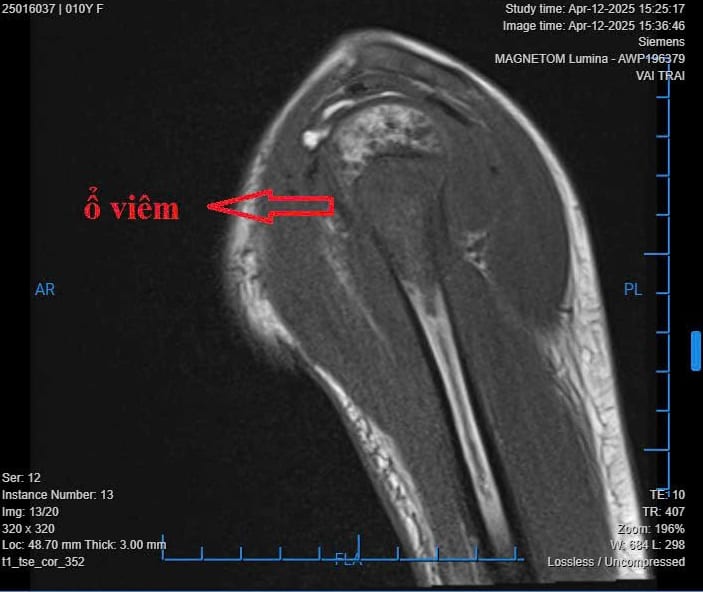
Image of the osteomyelitis lesion on MRI
The surgery was meticulously planned and carried out urgently by a team including Specialist Doctor I. Nguyen Tien Thanh, Doctor Nguyen Huu Toan, Doctor Mai Chi Thanh, and the anesthesia team. The patient received simultaneous resuscitation and emergency open surgery, debridement of the infected bone, drainage placement, and aggressive antibiotic therapy. The surgery lasted over 1 hour and was completed safely and successfully.
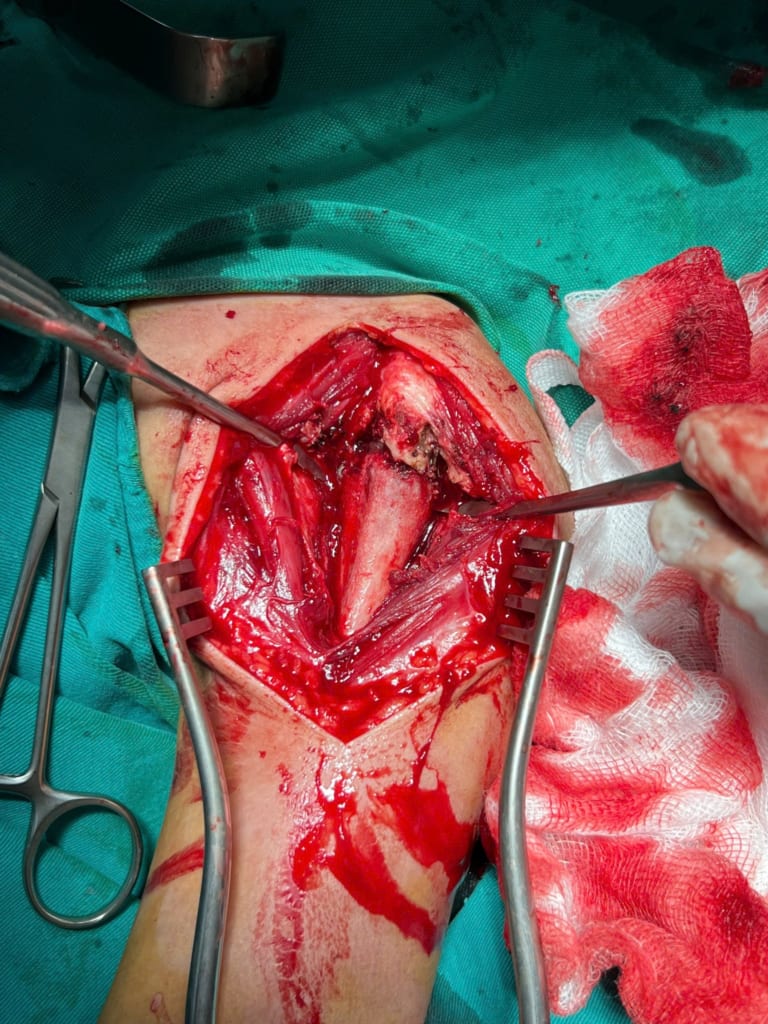
Actual images of bone marrow infection
After surgery, the patient was given special care in the Pediatric Surgery department with close monitoring by the medical team. Currently, the patient’s condition has stabilized and they have been discharged.
Osteomyelitis is a serious infection of the bone, usually caused by bacteria (primarily Staphylococcus aureus). The disease can occur at any age, but is particularly dangerous in children due to their developing skeletal system. If not detected and treated promptly, it can lead to severe complications such as permanent bone damage, abscesses, or systemic infections.
Acute osteomyelitis, if diagnosed and treated early, can be completely cured without leaving any sequelae. If delayed, the disease can progress to chronic, causing: bone destruction, limb deformity; pathological fractures; sepsis, threatening life. Especially in children, who have an incomplete immune system, the disease can progress rapidly, requiring timely intervention.
Through the case of patient L, specialists recommend taking the child to a medical facility immediately if the child shows signs of persistent bone pain or severe, unexplained pain; high fever accompanied by swelling and redness in the bone area; the child limits movement, walks limping, or refuses to use their hands/feet.
Young children cannot actively protect and take care of their health, so parents need to pay close attention to detect any changes or abnormalities in the child in a timely manner, thereby coordinating with pediatric specialists for quick and effective management and treatment.
