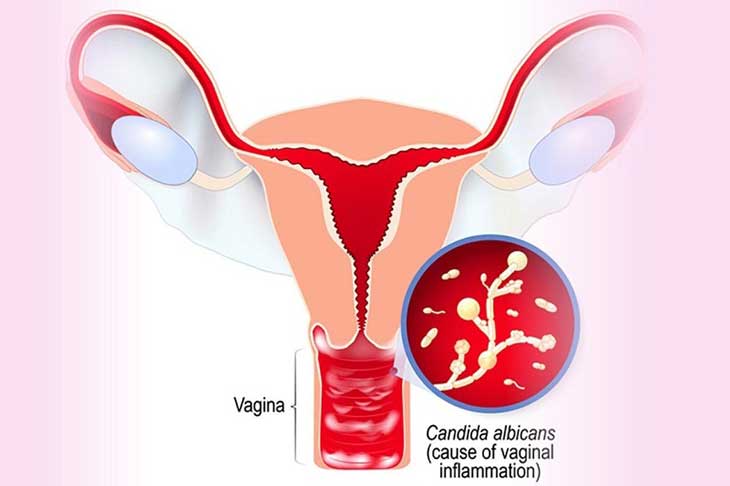
Pregnancy is a favorable condition for the invasion of various types of bacteria and fungi. Therefore, pregnant women have a higher rate of vaginal Candida infections than non-pregnant women, and this depends on the age of the pregnant woman. Compared to non-pregnant women, the symptoms and clinical manifestations of gynecological issues in pregnant women with vaginal Candida infections are more severe, potentially affecting the pregnancy process and the newborn.
– RECOGNIZING AND DETECTING WHETHER PREGNANT WOMEN HAVE FUNGAL INFECTIONS
When infected with vaginal Candida, the characteristic manifestation of the pregnant woman is a feeling of itching and often presents with a thick, white, clumpy vaginal discharge that is odorless.
In addition to being more susceptible to vaginal Candida infections than other groups, pregnant women with Candida infections can lead to dangerous complications during pregnancy such as miscarriage, preterm birth, low birth weight infants, and postpartum infections.
Therefore, educating women and pregnant women on hygiene issues or sexual relations during pregnancy is also necessary to reduce the rate of Candida infections and reinfections.
– HOW TO PREVENT VAGINAL FUNGAL INFECTIONS?
To prevent and reduce the risk of vaginal fungal infections, pregnant mothers should pay attention to:
Keep the intimate area clean and dry
Do not soak for long in water
Do not use products that may cause irritation or allergies
Do not douche
Ensure that clothes are always dry, clean, and exposed to enough sunlight
Regular gynecological check-ups for early detection and treatment


 – RECOGNIZING AND DETECTING WHETHER PREGNANT WOMEN HAVE FUNGAL INFECTIONS