
RESEARCH HIGHLIGHT: MULTIPLE DOSES OF ONDANSETRON IN CHILDREN WITH ACUTE GASTROENTERITIS IN EMERGENCY SETTINGS
1. INTRODUCTION
Acute gastroenteritis is an acute inflammatory condition of the gastric mucosa, small intestine, and colon, often leading to diarrhea, vomiting, abdominal pain, and sometimes accompanied by fever. This is a common condition in children, with 90-95% exhibiting vomiting symptoms. Ondansetron is a selective serotonin receptor (5-HT3) antagonist that works by blocking serotonin signals in the central and peripheral nervous systems, helping to prevent nausea and vomiting. However, the prescription of ondansetron after discharge to reduce vomiting symptoms remains controversial due to limited evidence. This study aims to evaluate the efficacy and safety of using multiple doses of ondansetron after discharge in children with gastroenteritis accompanied by vomiting.
2. STUDY SUBJECTS AND METHODS
2.1. Study Subjects
Children aged 6 months to under 18 years diagnosed with acute gastroenteritis accompanied by at least 3 episodes of vomiting in the previous 24 hours, symptoms onset within 72 hours, and having vomited within 6 hours prior to screening. Children must have received ondansetron in the emergency department. Exclusion criteria include hematemesis, bilious vomiting, allergy to ondansetron, prolonged QT interval, ventricular arrhythmias, complex congenital heart disease, glucose-6-phosphate dehydrogenase deficiency, or currently taking medications that may prolong the QT interval or other drugs with dangerous interactions. The study also excludes children who have participated in previous studies or are not committed to follow-up.
2.2. Research Methodology
This is a double-blind, placebo-controlled, superiority-designed randomized trial conducted at 6 pediatric emergency departments within the Canadian Pediatric Emergency Research Network (PERC).
A total of 1030 children were randomized in a 1:1 ratio to receive oral ondansetron (0.15 mg/kg, maximum 8 mg, maximum every 8 hours) or placebo for 48 hours post-discharge, as needed for vomiting or nausea. The medications were packaged identically. Monitoring was conducted through diaries and electronic/phone surveys at 24 hours, 48 hours, and 7 days post-enrollment, focusing on symptoms, healthcare utilization, medications, and adverse events.
The primary endpoint of the trial was the incidence of moderate to severe gastroenteritis (score ≥9 on the modified Vesikari scale, scale from 0-20, with higher scores indicating more severe illness) during the 7-day follow-up.
Secondary endpoints included the presence of vomiting, duration of vomiting (defined as the time from the first vomit to the last vomit); number of vomiting episodes within 48 hours; unscheduled visits within 7 days due to vomiting, diarrhea, dehydration, fever, abdominal pain, and intravenous fluid administration.
Data analysis was performed according to intention-to-treat, using mixed logistic regression, adjusted for site and weight.
3. RESEARCH RESULTS
Among the 1030 children participating in the study, 517 received ondansetron, and 512 received placebo. The basic characteristics were comparable between the two groups, with a median age of approximately 47 – 48 months, a median weight of 16 kg, and about 8 vomiting episodes in the 24 hours prior to screening.
– Primary endpoint: The average rate of moderate to severe gastroenteritis in the ondansetron group was 5.1%, lower than 12.5% in the placebo group; The absolute risk reduction was -7.4%, CI 95% -11.2 to -3.7; The adjusted OR was 0.50, CI 95% 0.40-0.60. Multivariate analysis confirmed the benefit (OR 0.46) of treatment.
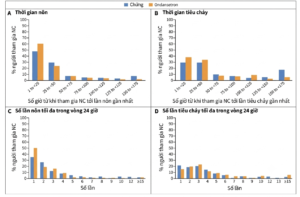
– Secondary and exploratory endpoints: No significant difference in the rate of vomiting (29.7% vs 33.2%) or median vomiting duration (0 hours in both groups), but the number of vomiting episodes in 48 hours was lower in the ondansetron group (OR 0.76; CI 95% 0.67-0.87). The rate of unscheduled follow-up (9.3% vs 13.2%) and intravenous fluid administration (2.6% vs 3.3%) showed no significant difference between the two groups. The number of diarrhea episodes was not different across the entire group. Adverse events between the two groups were equivalent (7.0% vs 7.1%, OR 0.99), with one serious event in each group.
– No significant interaction between the primary endpoint and subgroup (age, gender, vomiting frequency, consumption).
diarrhea).
Table 1: Main, secondary research results, safety, and exploration
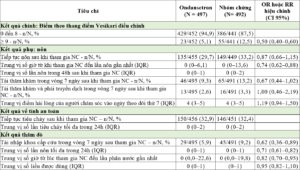
Figure 1: Duration and frequency of vomiting and diarrhea
4. CONCLUSION
The use of multi-dose ondansetron after discharge for children with gastroenteritis accompanied by vomiting in the emergency department helps reduce the risk of moderate to severe gastroenteritis within 7 days compared to placebo. Benefits include a reduction in the frequency of vomiting in the first 48 hours, without a significant increase in the rate of readmission or fluid infusion. The study results support the use of ondansetron after discharge in children with frequent vomiting, but some risks such as diarrhea, especially when children receive multiple doses, should be considered.
Source: N Engl J Med. 2025 Jul 17;393(3):255-266. doi: 10.1056/NEJMoa2503596.
Leave a reply
