Surfactant Therapy: Advanced technique providing superior effectiveness in the treatment of neonatal respiratory distress

Surfactant is a lipoprotein compound secreted by type II cells, essential for lung function after birth. Primary deficiency in premature infants leads to respiratory distress syndrome in premature infants (hyaline membrane disease). Secondary deficiency occurs in cases such as: maternal diabetes, asphyxia at birth, pneumonia, pulmonary hemorrhage, meconium aspiration, oxygen toxicity, etc. Surfactant deficiency causes respiratory distress syndrome in newborns, especially in premature infants, as the enzyme system catalyzing the synthesis of Surfactant by type II cells is not fully developed. Therefore, premature infants are often at high risk of developing this condition. The benefits of Surfactant include: improving lung ventilation, enhancing blood oxygenation, reducing complications of pneumothorax, alveolar overdistension, and decreasing the rate of severe disabilities. The case of the infant of mother N.T.L in Truong Tho, An Lao, Hai Phong, born on March 6, 2023, at Hai Phong International Obstetrics and Pediatrics Hospital is a successful emergency case treated with Surfactant therapy. 
Preterm birth at 32 weeks gestation, weighing 1800g, after birth the infant suffered from respiratory distress and was immediately consulted by the doctors of the Neonatal Intensive Care Unit to manage the respiratory distress right in the delivery room, then transferred to the Neonatal Intensive Care Unit. The infant was diagnosed with: Neonatal respiratory distress / Stage II-III membrane disease / Preterm birth at 32 weeks. The child was indicated for direct administration of 2 vials of Surfactant (Curosurf) into the lungs, assisted with mechanical ventilation, and intravenous nutrition.
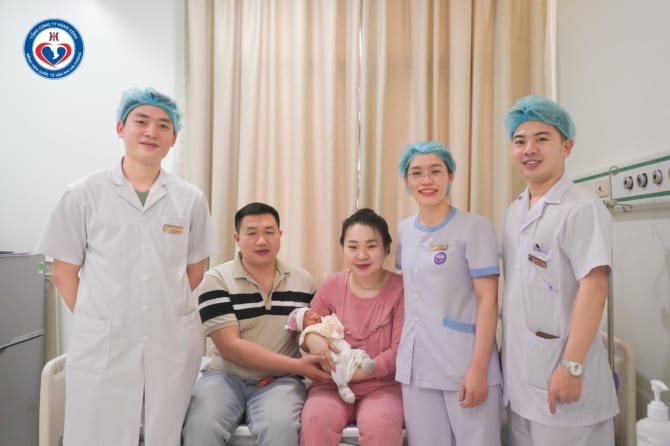
After administering 2 vials of Curosurf, the infant’s respiratory distress improved, began low parameter mechanical ventilation, non-invasive ventilation, and was weaned off mechanical ventilation after 3 days. The infant was discharged after more than two weeks of treatment in the department, gaining 400g in weight, bringing joy and happiness to the family and the medical staff of the Neonatal Intensive Care Unit.
-

- Y bác sĩ khoa HSCC-SS chung vui cùng gia đình bệnh nhi trong ngày ra viện
-
- Thư cảm ơn từ gia đình bệnh nhi

Surfactant administration is a high-tech procedure with considerable costs. However, currently, the medication used in this technique is fully covered by the health insurance fund when used according to the indications, contributing to saving the infant’s life while also reducing treatment costs for the family.
We hope that with all efforts and the highest determination, the Neonatal Intensive Care Unit will contribute the best to the health care of children.
Leave a reply